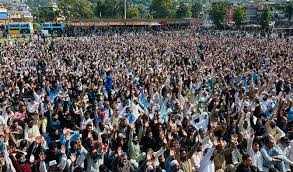
After several days of violent clashes that left at least nine people dead, the government of Azad Kashmir and the Joint Awami Action Committee (JAAC) have reached a peace agreement to restore calm in the region.
Key Highlights
-
Nine people killed, including three policemen, in protests and clashes.
-
Judicial commission to investigate violent incidents.
-
Compensation and government jobs announced for families of victims.
-
Committee formed to review reserved migrant seats in the assembly.
-
Protesters demanded structural reforms, removal of perks, and hydel project royalties.
How the Agreement Was Reached
The unrest began on September 29, 2025, when the Jammu Kashmir Joint Awami Action Committee (JKJAAC) called for an indefinite lockdown. Protesters demanded:
-
Removal of extra perks and privileges for government officials.
-
Elimination of 12 reserved seats in the Azad Kashmir Legislative Assembly for migrants from Indian-administered Kashmir.
-
Fair royalties for hydropower projects in the region.
The demonstrations quickly turned violent, resulting in the deaths of six civilians and three policemen.
In response, Prime Minister Shehbaz Sharif sent a negotiation team from Islamabad, led by senior ministers, to join talks with local leaders.
Terms of the Agreement
Pakistani Planning Minister Ahsan Iqbal confirmed the breakthrough, calling it a success of “dialogue, wisdom, and mutual respect.”
The official agreement includes:
-
Formation of a judicial commission to investigate the violence.
-
Reduction in the number of ministers and secretaries in the Azad Kashmir government.
-
Establishment of a committee on reserved migrant seats in the assembly.
-
Compensation for victims’ families:
-
Families of the deceased will receive monetary compensation equal to that of law enforcement officers.
-
Rs10 lakh ($3,554) for each injured person.
-
One government job will be granted to a family member of each deceased within 20 days.
-
Background of Kashmir Unrest
Kashmir has been divided between India and Pakistan since 1947, with both countries claiming the region in full but administering parts of it separately.
Azad Kashmir, administered by Pakistan, has seen repeated waves of protests over political rights, subsidies, and resource distribution.
In May 2024, a similar movement disrupted life in the region, leaving four people dead. That unrest ended after PM Sharif approved a Rs23 billion ($86 million) relief package and announced a judicial commission. However, protesters warned at the time that failure to implement reforms would trigger further unrest.
Conclusion
The latest agreement between the Azad Kashmir government and the JAAC has ended days of violent protests, restoring temporary peace. With commitments for judicial inquiry, compensation, and reforms, the deal aims to address long-standing political and economic grievances in the region.
Whether this settlement brings lasting stability will depend on how quickly and sincerely the government implements the promised reforms.